Why Time Feels Faster as You Get Older: The Real Brain Reasons
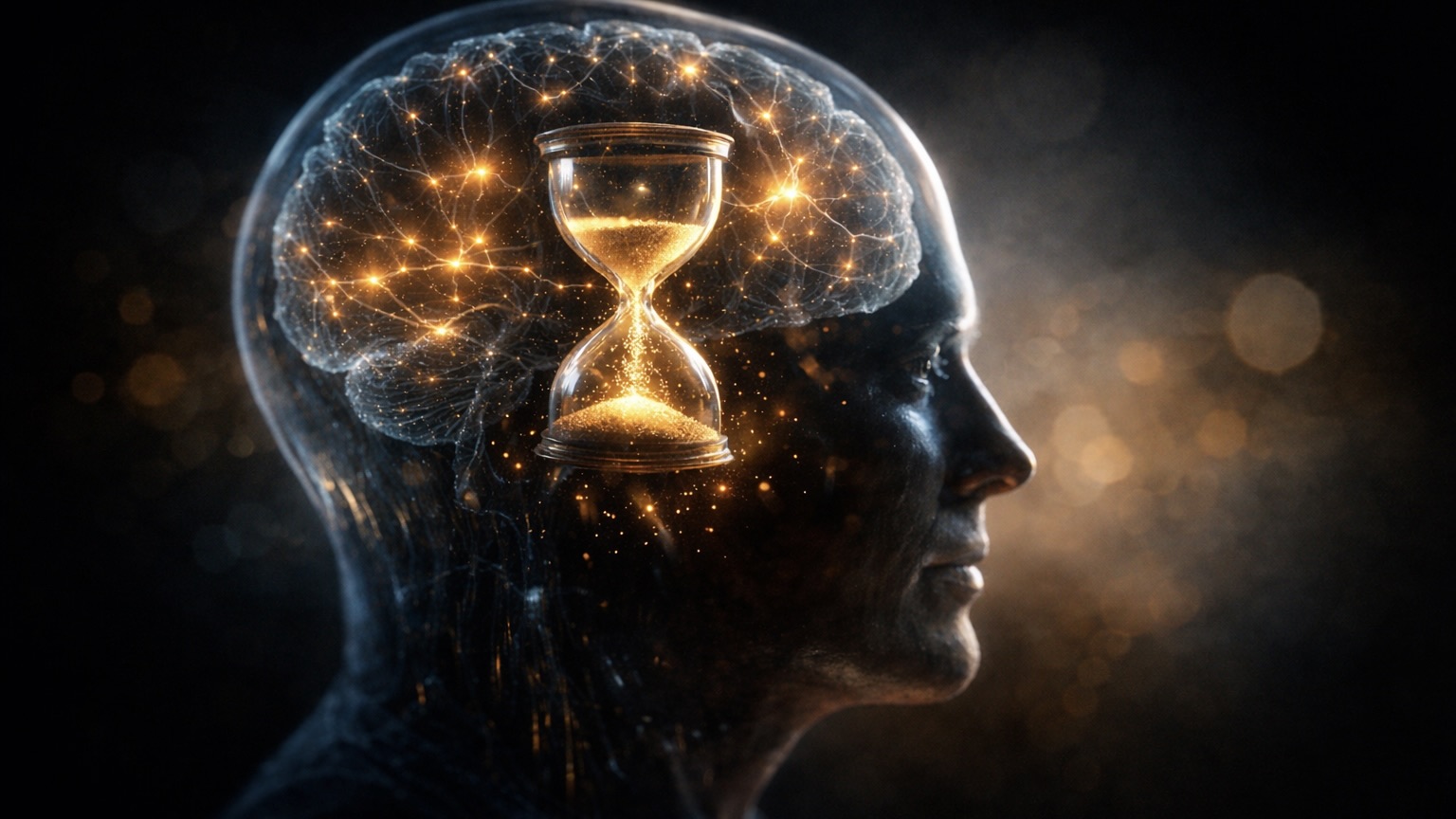
Have you ever looked up from Monday and realized it’s somehow Friday… and your tea is still “warm-ish” in the cup? If you’ve been wondering Why Time Feels Faster as You Get Older, you’re not alone. This feeling shows up in surveys, lab studies, and basically every family WhatsApp group where someone says, “2020 was last week.”
Here’s the good news: clocks haven’t secretly sped up. Your brain just experiences time differently as you age and it does so for understandable, research-backed reasons.
In this article, we’ll unpack Why Time Feels Faster as You Get Older using solid psychology and neuroscience, explain what’s real (and what’s just a popular myth), and share practical ways to make your weeks feel fuller again.
The big idea: time is a brain experience, not a wall clock
Your brain doesn’t “sense time” with a single time-organ the way it senses light with eyes. It builds time from attention, emotion, memory, and prediction. Researchers often separate two kinds of time experience:
- Prospective time: how time feels while it’s happening (a boring meeting can feel like a geological era).
- Retrospective time: how long a period feels after you look back (“How was it already December?”).
Many explanations of Why Time Feels Faster as You Get Older come down to retrospective time: when your memory stores fewer distinct “chapters,” your past compresses.
1) Your brain records fewer “new chapters” as life gets routine
Childhood is packed with firsts: first school, first best friend, first solo bus ride, first time you realized adults also don’t know what they’re doing.
Adulthood? Same commute. Same apps. Same coffee order. Same “We should catch up soon!” text that never turns into an actual catch-up.
When life becomes routine, your brain stores fewer novel details. Looking back, your mind finds fewer distinct markers, so months feel “thin” and fast. This novelty-and-memory explanation appears across psychology discussions and reviews of subjective time.
This is a core reason people ask Why Time Feels Faster as You Get Older—because the memory density of adulthood often drops.
2) “Event segmentation” may change with age
A newer neuroscience angle looks at how the brain divides experience into events—like scenes in a movie. An analysis of fMRI data (participants ages 18–88 watching the same film clip) found that older adults showed fewer transitions between stable brain activity “states.” In simple terms: their brains appeared to register fewer distinct event boundaries during the same time window. That pattern could plausibly contribute to time feeling like it passed quickly.
This doesn’t mean older brains “work worse.” It means they may process continuous experience with different granularity. And that can feed the everyday feeling of Why Time Feels Faster as You Get Older.
3) Attention changes what time feels like in the moment
When you pay close attention to time—waiting for OTP, sitting in a queue, watching a progress bar that moves like it’s powered by sadness—time feels slow.
When you become absorbed chatting with a loved one, doing meaningful work, getting lost in a hobby, time can feel fast in the moment.
Research reviewing age-related time experience suggests that factors like attention, meaningful engagement, and emotions can shape how fast time seems to pass. Some findings also suggest interesting age differences in how meaningful activity relates to perceived time.
So Why Time Feels Faster as You Get Older isn’t only about memory, your attention patterns matter too.
4) The “proportional theory” sounds right… but it’s not the whole story
You may have heard this: “When you’re 10, one year is 10% of your life. When you’re 50, it’s only 2%—so it feels shorter.” This is called a proportional-life explanation.
It’s a neat idea, and it may describe part of the intuition. But researchers also note that the subjective speed of time doesn’t map perfectly onto simple math. Studies comparing different age groups and different time spans suggest multiple competing explanations, not a single universal formula.
So yes, proportions may contribute—but the stronger evidence tends to point to memory, novelty, attention, and how we segment events.
5) Emotion and “time horizons” can shift priorities and time feelings
As people age, many become more selective about goals and relationships. Lifespan psychology research often discusses how perceived future time shapes motivation and emotional priorities (sometimes framed as socioemotional selectivity). Those shifts can influence what feels meaningful and how time is experienced in daily life.
This doesn’t directly “speed up the clock,” but it can change how you remember periods: meaningful, emotionally rich days can feel fast while happening and oddly full when recalled. That contrast confuses all of us and fuels the question Why Time Feels Faster as You Get Older.
What’s not a reliable explanation
Let’s clear a few common claims:
- “Time speeds up because your brain slows down.” Some popular essays suggest a simple brain-speed decline explanation. Reality looks more complex: subjective time involves many systems (attention, memory, emotion, prediction), and research doesn’t support a single “brain speed = time speed” rule.
- “It’s only nostalgia.” Nostalgia changes how you feel about the past, but studies treat “passage of time judgments” as a measurable phenomenon, not just sentiment.
How to make life feel longer (without adding years)
You can’t slow Earth’s rotation (NASA will ignore your email). But you can change how your brain records and replays your life, especially the retrospective sense that months disappear.
Here are strategies that align with research-based explanations of Why Time Feels Faster as You Get Older:
1) Add “novelty bites” (small is enough)
Novelty doesn’t require a Europe trip. Try:
- a new walking route twice a week
- a new recipe monthly
- a new skill in 10-minute sessions (language apps, sketching, music)
Small novelty creates more distinct memory markers, which can expand time in retrospect.
2) Create memory anchors on purpose
Your brain stores highlights. Help it:
- Take 1 photo a day for a week (not for posting, just for remembering).
- Write a 2-line “today log” (what happened + what felt good).
- Mark “firsts” (first swim of the year, first mango, first rainy commute).
These anchors fight the “routine blur” that drives Why Time Feels Faster as You Get Older.
3) Use mindful attention during ordinary moments
Mindfulness doesn’t mean sitting like a statue. It means noticing details:
- taste, smell, texture
- sounds and faces
- what you’re doing right now
This supports richer encoding and reduces “autopilot days,” which often vanish from memory.
4) Break “template weeks”
If every week looks the same, your brain files them under the same folder: Copy-Paste_Week_Final_Final2.
Try one intentional weekly variation:
- one social plan
- one outdoor plan
- one learning plan
- one “play” plan (yes, adults need play)
Quick self-check: which one is your main reason?
When you ask Why Time Feels Faster as You Get Older, you might be describing different patterns:
- If days feel slow but years feel fast → likely memory density (routine, fewer new markers).
- If days feel fast and years feel fast → likely busy absorption + low reflection.
- If time feels weirdly “blurred” lately → consider stress, sleep, and overload (they affect attention and memory encoding).
(And yes, doomscrolling can turn a full hour into “What just happened?”)
Conclusion
So Why Time Feels Faster as You Get Older? The most evidence-friendly answer is this:
Your brain stores fewer novel, distinct events as routine grows—so when you look back, life compresses. Attention, emotional meaning, and how your brain segments events also shape the feeling, and newer neuroscience work supports the idea that older adults may register fewer “event boundaries” in the same experience window.
The best part: you have real control over this. You can’t change the calendar, but you can change the chapters your brain writes.
FAQs
1) Is it true that time really speeds up as we age?
No. Physical time stays constant. Research supports that many people feel time passes faster with age, but it’s a subjective perception shaped by memory, attention, and routine.
2) Why did childhood summers feel so long?
Childhood contains more novelty and “first-time” experiences, which creates richer memories. Looking back, that period feels longer because your brain stored more distinct events.
3) Can novelty really make life feel longer?
It can make time feel fuller in retrospect by increasing memorable markers. Even small changes help.
4) Why does time fly when I’m busy?
When you focus on tasks or enjoyable activities, you track time less consciously. That can make time feel fast in the moment.
5) What’s one simple habit to try this week?
Do one “new route / new place / new activity” change and write a 2-line daily log for 7 days. You’ll likely remember the week more clearly.
Sources
- Scientific American overview on why time seems to speed up with age
- Review on subjective time perceptions and aging (PubMed)
- Study on aging and the speed of time (Friedman, 2010)
- Review on age-related time perception implications (PMC)
- Recent neuroscience report on event segmentation differences with age (covered in Live Science)
- Long Now talk referencing novelty, memory, and time experience (Eagleman)
- Guardian piece summarizing expert views on routine/novelty and “slowing time” strategies
Read other articles at: https://DecodeFacts.com