Immortal Jellyfish Facts: The Science of Biological Immortality
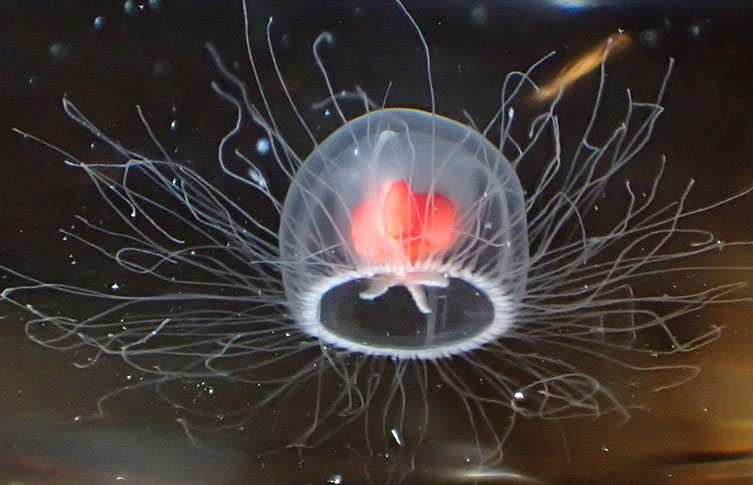
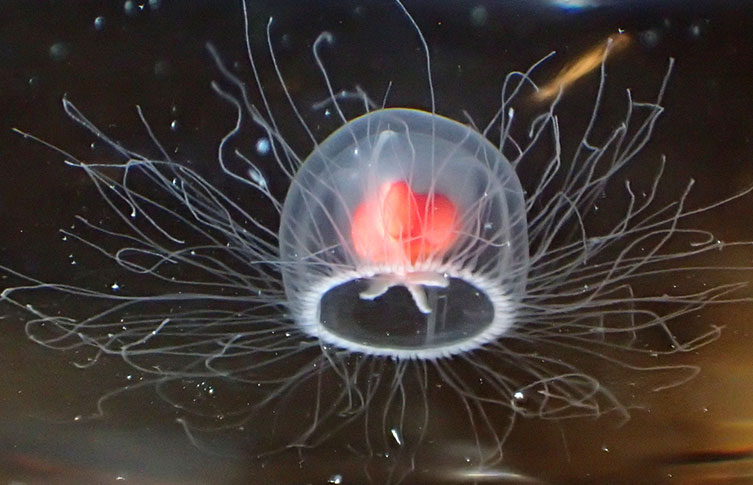
If you ever wished for a “reset” button after a stressful week, meet the animal that basically does that. The immortal jellyfish (Turritopsis dohrnii) can rewind its life cycle under stress and return to a younger stage. Scientists call this biological immortalityand no, it doesn’t mean the jellyfish can’t die. It means the jellyfish doesn’t have to die from aging in the usual way.
This article delivers Immortal Jellyfish Facts you can trust: what the animal really does, how it does it, what researchers have found in its genes, and why humans can’t copy-paste the trick (yet).
What “biological immortality” actually means (and what it doesn’t)
Let’s clear the biggest myth first. When people say the immortal jellyfish “lives forever,” they usually mean this:
- It can reverse development an adult jellyfish (medusa) can transform back into a juvenile, colony-forming stage (polyp).
- It can repeat that cycle more than once under the right conditions.
But nature still runs a tough neighborhood. Predators don’t care about your fancy biology. So one of the most important Immortal Jellyfish Facts is this: the jellyfish can still die from injury, starvation, disease, or being eaten. Britannica and other references explicitly note that “immortal” doesn’t equal “invincible.”
Meet Turritopsis dohrnii: tiny, real, and kind of famous
The immortal jellyfish belongs to a group called hydrozoans. Adults stay very small (millimeters-scale), and they live in temperate-to-tropical waters. Their spread appears linked in part to shipping and ballast water, which can move small marine organisms across oceans.
Another key Immortal Jellyfish Facts point: scientists described the species in the 1800s, but researchers recognized its dramatic life-cycle reversal much later, after observations and lab work revealed the “reverse gear.”
Immortal Jellyfish Facts: the normal life cycle (before the “rewind”)
Most jellyfish relatives follow a one-way path:
- Planula larva (a tiny drifting stage)
- Polyp (attached colony stage)
- Medusa (free-swimming adult that reproduces)
So far, nothing supernatural. The twist comes after the medusa reaches adulthood.
Under harsh conditions, think physical damage, sudden environmental stress, or aging-related weakness, the medusa can trigger a reverse process that takes it back toward the polyp form. Researchers describe this reverse development in detail, including a transitional cyst-like stage.
That’s why “Immortal Jellyfish Facts” content often goes viral: it sounds like sci-fi, but biology wrote it first.
How the “rewind” works: reverse development step-by-step
Here’s the most grounded version of the magic trick:
1) Stress hits the adult medusa
Stressors can include injury, starvation, environmental change, or other harsh conditions.
2) The medusa collapses into a cyst-like stage
The jellyfish doesn’t simply “turn into a baby.” It reorganizes itself into a less differentiated state first.
3) It forms a new polyp colony
From that stage, it can re-form into a polyp, which can then bud off new medusae again.
One more of the core Immortal Jellyfish Facts: this isn’t ordinary regeneration like “regrow a limb.” It’s closer to a whole-body developmental reboot.
The cellular superpower behind it: transdifferentiation
If you remember just one science term, make it this: transdifferentiation.
Transdifferentiation means one mature cell type converts into another mature cell type. In the immortal jellyfish, cells can switch identities during reverse development—supporting the transformation from adult structures back toward the polyp form.
This is the part that fascinates aging researchers. Most animals lock many cell identities into place. The immortal jellyfish keeps more flexibility.
So when people ask for “Immortal Jellyfish Facts,” they usually want the headline: it changes its body plan by changing cell fates.
“Immortal” still has limits (Nature keeps receipts)
Here are honest Immortal Jellyfish Facts that protect your article from hype:
- It can still die. Predation, infections, and accidents can end the story.
- The trick needs conditions. Reverse development shows up under specific stressors and settings; labs can induce it, but oceans don’t offer perfect control.
- It’s rare among animals. Many organisms regenerate. Very few flip their life cycle backward like this.
Think of it like this: the jellyfish owns a backup generator. Predators can still unplug the whole building.
What scientists found in its genes (and why that matters)
In 2022, researchers published a comparative genomics study in PNAS that compared the immortal jellyfish to a closely related “mortal” species. The study reports genetic patterns consistent with strong maintenance systems—genes involved in DNA repair, telomere maintenance, and cellular stress responses show notable differences between the species.
Popular science coverage (based on that research) highlighted an attention-grabbing detail: the immortal jellyfish showed expansions in genes linked to DNA repair and protection compared with its relative.
Important note for your credibility: genes don’t act alone. They run as networks. That’s why many researchers now study gene expression during the reversal process itself (which stages switch on which pathways). Transcriptome studies track those shifts across the reverse-development timeline.
Another practical Immortal Jellyfish Facts takeaway: scientists now treat Turritopsis dohrnii as a model for studying cell plasticity and aging biology, not as a literal “immortality recipe” for humans.
Could this help humans live longer?
This is where the internet usually sprints ahead of the science. Let’s keep it logical.
What seems plausible
- Learning how animals manage cellular stress, DNA damage, and tissue reset could inspire new directions in medicine.
What remains hard
Humans have complex organs, specialized tissues, and strict controls that prevent cells from changing identity freely. When cells “forget who they are” in humans, we often call it cancer or at least a serious risk factor. So researchers must balance rejuvenation ideas against safety. (That’s not pessimism; it’s biology being responsible.)
This is why the best 2026-style framing for Discover is: Immortal Jellyfish Facts teach us about resilience and repair, not instant immortality for people.
12 Immortal Jellyfish Facts (quick, shareable, and accurate)
- The immortal jellyfish’s scientific name is Turritopsis dohrnii.
- It can reverse its life cycle from adult medusa to polyp under stress.
- Scientists call this ability biological immortality, not invincibility.
- The reversal involves a transitional cyst-like stage and major body reorganization.
- The process uses transdifferentiation, where cells change identity.
- The animal still dies from predators, disease, and accidents in real oceans.
- It has both a polyp stage (attached, colonial) and a medusa stage (free-swimming).
- Comparative genomics links its resilience to differences in DNA repair and maintenance pathways.
- Transcriptome studies map gene activity during reverse development.
- Researchers use it to study aging, regeneration, and cell plasticity.
- References suggest global shipping can help spread it beyond its original region.
- The immortal jellyfish remains one of the most famous examples of life-cycle reversal in animals.
(Yes, that list counts as Immortal Jellyfish Facts too—Google Discover loves clean scannability.)
Immortal Jellyfish Facts: a reality-check conclusion (with a smile)
The immortal jellyfish doesn’t break the laws of nature. It simply uses a loophole: when life gets rough, it can step back into an earlier chapter and start again. Scientists still debate how often this happens in the wild, but lab and genetic studies make the core phenomenon very real.
So if you want the most honest one-line summary for 2026: Immortal Jellyfish Facts show that aging isn’t one-size-fits-all—some animals treat “adult” as a suggestion.
Sources note: This article uses a mix of peer-reviewed research and reputable reference institutions.
References
- Piraino, S., Boero, F., Aeschbach, B., & Schmid, V. (1996). Reversing the life cycle: Medusae transforming into polyps and cell transdifferentiation in Turritopsis dohrnii (Cnidaria, Hydrozoa). The Biological Bulletin. https://www.journals.uchicago.edu/doi/10.2307/1543022
- National Center for Biotechnology Information. (n.d.). Reversing the life cycle… (PubMed record). PubMed. https://pubmed.ncbi.nlm.nih.gov/29227703/
- Pascual-Torner, M., et al. (2022). Comparative genomics of mortal and immortal cnidarians unveils novel keys behind rejuvenation. Proceedings of the National Academy of Sciences (PNAS). https://www.pnas.org/doi/10.1073/pnas.2118763119
- Encyclopaedia Britannica. (n.d.). Immortal jellyfish. Britannica. https://www.britannica.com/animal/immortal-jellyfish
- Natural History Museum. (n.d.). The immortal jellyfish: The secret to cheating death. NHM (UK). https://www.nhm.ac.uk/discover/immortal-jellyfish-secret-to-cheating-death.html
- American Museum of Natural History. (n.d.). The immortal jellyfish. AMNH. https://www.amnh.org/explore/news-blogs/immortal-jellyfish
Read other articles at: https://DecodeFacts.com
Previous
Neural Networks: How AI Learns Like Humans
Next
Black Holes: The Universe’s Most Mysterious Objects