How Smart Are Octopuses? The Science Behind Their “Alien” Brains
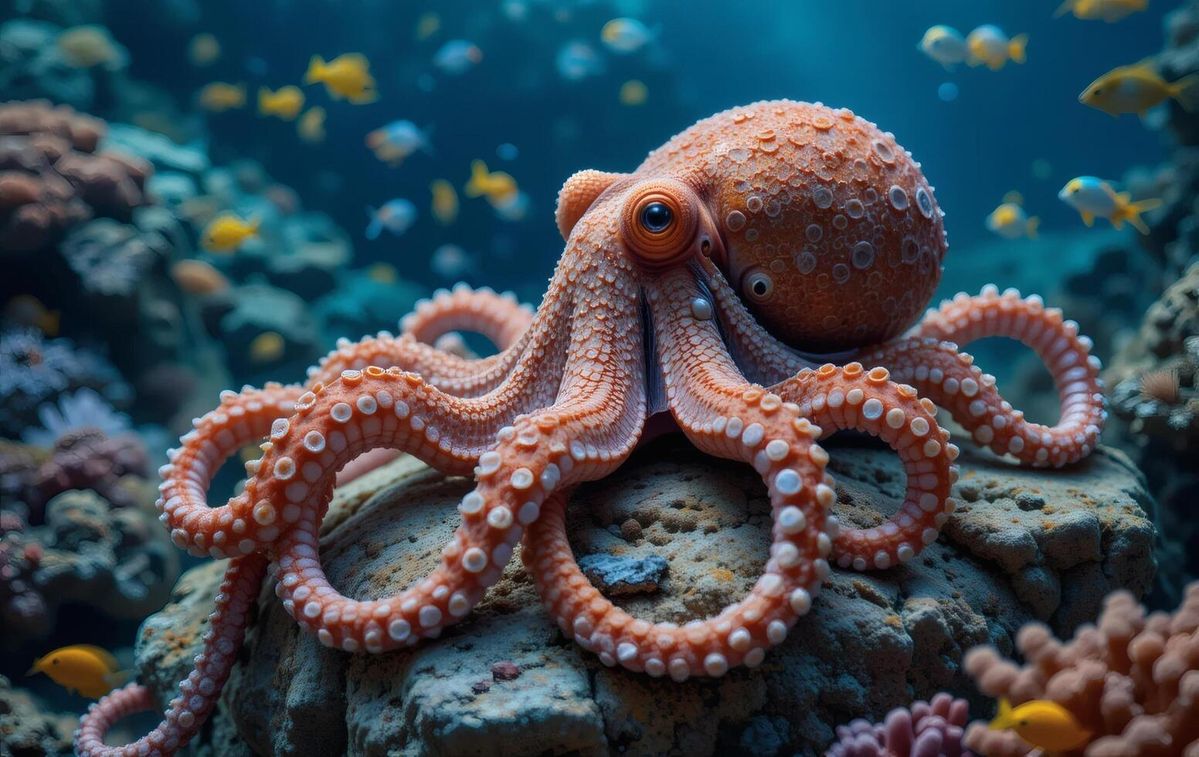
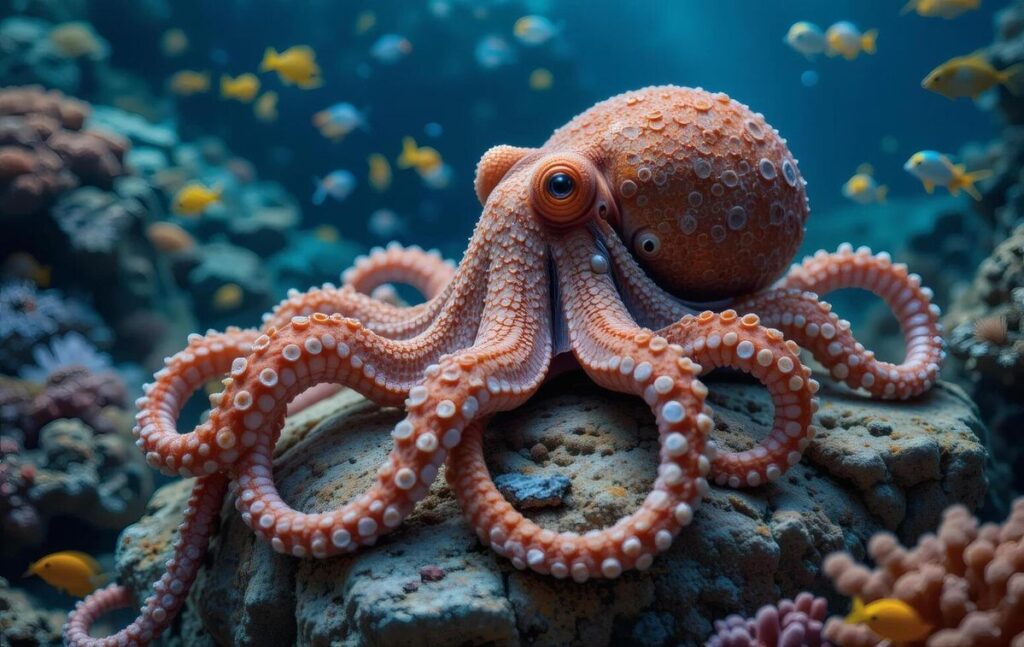
If you’ve ever watched an octopus open a jar, slip through a gap that looks physically impossible, and then stare at you like it’s judging your life choices—welcome. You’re not imagining things. Scientists have good reasons for calling octopuses unusually intelligent animals.
So, How smart are Octopuses really? And what does “smart” even mean for a creature that evolved along a totally different path than mammals? Let’s unpack the science, keep it real, and add just enough humor so your brain doesn’t try to escape the page like an octopus in a badly secured aquarium.
What “intelligence” means (and why octopus intelligence looks different)
When people ask, How smart are Octopuses, they usually mean: can they learn, solve problems, remember, adapt, and choose strategies rather than just react?
Researchers often look for things like:
- Problem-solving (figuring out how to get food from tricky containers)
- Learning & memory (improving with practice; remembering what worked)
- Flexibility (changing strategy when the rules change)
- Tool use (using objects in a future-focused way)
- Recognition (identifying individuals, including humans)
Octopuses show many of these traits in experiments and observations.
The “alien brain” factor: neurons in the arms, not just the head
Here’s the detail that makes people spit out their coffee: an octopus doesn’t run its nervous system like a typical “central command” animal.
Multiple sources describe that a large share of an octopus’s neurons sit in its arms rather than only in a central brain. The Natural History Museum explains it like this for the common octopus (Octopus vulgaris): roughly 500 million neurons, with about two-thirds in the arms.
The Smithsonian also explains that around two-thirds of their neurons are in their arms, not their head.
That setup helps explain why people keep asking, How smart are Octopuses, as if the answer might be: “Yes. And also… it depends which arm you mean.”
Recent research continues to map how complex octopus arm nerves are and how arm-level circuits handle sensory and motor processing.
Arms that “think” (without calling HQ every second)
Scientific American describes how octopus arms can act like they have partly independent control—gathering sensory information and driving movement without constantly consulting major brain regions.
In plain language: the octopus brain doesn’t micromanage every sucker. It sets goals, and the arms handle a lot of the “how.” That’s not magic. It’s biology and it’s part of why How smart are Octopuses isn’t a simple one-number answer.
Proof #1: Octopuses solve puzzles (and they don’t just brute-force it)
One of the clearest experimental lines comes from a PLOS ONE study where researchers tested octopuses on a multi-level puzzle task. The animals learned to open a container and then adapted as the task changed across levels showing behavioral flexibility rather than getting stuck repeating one method.
This matters because “intelligence” isn’t only about doing one hard thing once. It’s about adjusting when the world changes its rules—something humans also struggle with (hello, software updates).
So, How smart are Octopuses in problem-solving terms? Smart enough to learn a task, then re-learn it when you move the goalposts.
Proof #2: Tool use (yes, really): the coconut-carrying octopus
Tool use isn’t only a primate party trick.
A famous Current Biology report documented octopuses carrying coconut shell halves and later assembling them into a shelter—behavior the authors described as defensive tool use.
This stands out because the octopus doesn’t just grab an object for immediate use. It transports the object and deploys it later. That “save now, use later” pattern looks like planning.
If your readers ask, How smart are Octopuses, this coconut story is one of the best evidence-backed examples to include—because it’s specific, observable, and published in a top journal.
Proof #3: They recognize individual humans (yes, you specifically)
Octopuses don’t just respond to “human = danger” or “human = food.”
A study in Anthrozoös (also indexed on PubMed) tested whether giant Pacific octopuses could distinguish between two unfamiliar humans who treated them differently. The researchers recorded distinct behavioral responses depending on the person.
That doesn’t mean your local octopus is writing a diary about you. But it does support the idea that octopuses can learn individual differences and respond accordingly.
And yes, that nudges the answer to How smart are Octopuses toward: “smarter than you’d expect from an animal with no backbone and eight extremely busy arms.”
Proof #4: Learning, curiosity, and the “octopus personality” vibe
Octopuses often show exploratory behavior: they manipulate objects, investigate their environment, and sometimes behave like curious toddlers with suction cups (minus the bedtime routine).
Evidence on octopus play is still developing, and researchers treat it carefully. A recent open-access paper discusses evidence and measurement of play-like behavior in captive octopuses and highlights how little deliberate research exists compared to mammals.
This matters for a 2026-style explainer because it shows scientific humility: we see intriguing behaviors, and scientists keep testing them instead of declaring “octopuses are basically underwater humans.”
Why octopus intelligence evolved at all
Octopuses live in environments that reward brains:
- They hunt actively and face many predators.
- They use camouflage and stealth.
- They interact with complex seafloor habitats.
The Smithsonian notes that octopus intelligence likely followed an evolutionary path different from human intelligence—yet still produced impressive problem-solving behavior.
In other words: evolution didn’t copy-paste our brain design. It built something else that still works incredibly well.
So when you ask, How smart are Octopuses, you’re really asking: “How did nature build a clever mind in a totally different way?”
The ethics angle: governments started treating them as sentient
“Smart” discussions often lead to another question: do octopuses have subjective experiences like pain or discomfort?
In the UK, the government announced that cephalopod molluscs (including octopuses) fall under recognition of sentience in policy decision-making, following a scientific review commissioned and reported through the London School of Economics framework.
This doesn’t “prove” octopus feelings in the way a lab test might prove a chemical reaction. But it shows that policy makers increasingly treat the evidence seriously.
For readers in 2026, that context helps build trust: science and policy both take octopus cognition and welfare more seriously than they did a decade ago.
Quick reality check: what octopus intelligence is (and isn’t)
Let’s keep it honest. Octopuses don’t build civilizations. They don’t teach each other language the way humans do. And they don’t form long-term social groups the way dolphins or primates often do.
But they do show a powerful mix of:
- flexible problem-solving
- sophisticated nervous-system design
- tool use in the wild
- individual recognition
That package makes the question How smart are Octopuses valid—and genuinely fascinating.
FAQ
How smart are Octopuses compared to a dog?
Some sources note the common octopus has a neuron count in the range often compared to dogs, but neuron count alone doesn’t equal “IQ.” Still, octopuses show strong problem-solving and flexibility in experiments.
How smart are Octopuses at problem-solving?
Experiments show they can learn multi-step tasks and adapt when the task changes, which suggests behavioral flexibility.
Do octopuses really have “brains” in their arms?
They have extensive neural circuitry in their arms, and a large portion of their neurons sit there, supporting semi-independent control and sensory processing.
Can octopuses use tools?
Yes—scientists documented coconut-carrying octopuses transporting shells and assembling them as shelter later, described as defensive tool use.
Are octopuses considered sentient?
A UK government announcement and an LSE-led evidence review supported including cephalopods in sentience considerations for animal welfare policy.
Can octopuses recognize humans?
Evidence suggests they can distinguish between individual humans in controlled settings and respond differently based on experience.
Final takeaway
So, How smart are Octopuses?
Smart enough to solve puzzles, use tools, recognize individuals, and run a nervous system where the arms do a lot of the “thinking” work.
They don’t think like humans—but that’s exactly what makes them impressive. Nature didn’t build a mini person in the ocean. It built a different kind of mind.
And if that doesn’t count as “alien brains,” what does?
Sources (trusted references)
- Smithsonian Ocean: “Why the Octopus Brain is so Extraordinary”
- Natural History Museum: Octopus neuron counts and arm neuron distribution
- Finn, Tregenza & Norman (2009), Current Biology: “Defensive tool use in a coconut-carrying octopus”
- Richter, Hochner & Kuba (2016), PLOS ONE: “Pull or Push? Octopuses Solve a Puzzle Problem”
- Anderson et al. (2010), octopuses recognizing individual humans (PubMed record)
- Scientific American (2023): Octopus arm control and distributed processing
- UK Government (2021) + LSE report (2021): Evidence review supporting cephalopod sentience recognition
- peer-reviewed research (e.g., Current Biology, PLOS ONE)
- reputable science institutions (Smithsonian)
- museum science explainers (Natural History Museum)
- established science journalism (Scientific American)
- government and academic evidence reviews on sentience (UK GOV + LSE report
Read other articles at:https://DecodeFacts.com