The Rosetta Stone and the Decipherment of Ancient Egypt: How Hieroglyphs Were Finally Read
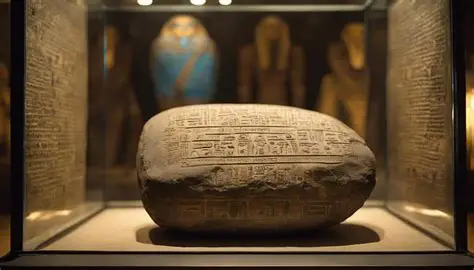
The Rosetta Stone looks like a broken, dark slab with tight rows of text. It does not look like a revolution. Yet it triggered one of history’s biggest “lightbulb moments”: modern scholars learned how to read ancient Egyptian writing again.
Here’s the funny part (the historically accurate kind of funny): the Rosetta Stone does not contain secret cosmic wisdom. It carries an official decree—more like a royal press release—issued in 196 BCE for King Ptolemy V. That routine-looking text became the key that unlocked Egyptian scripts because it appears in three versions: Egyptian hieroglyphs, Egyptian Demotic, and Ancient Greek.
This article explains the Rosetta Stone decipherment step by step—what the stone says, why it uses three scripts, how scholars cracked the system, and why the breakthrough still matters in 2026.
What Rosetta Stone really is
The Rosetta Stone is a carved stone stele from the Ptolemaic Period (created in 196 BCE). It preserves a decree issued by a council of priests at Memphis, affirming the royal cult of the young king Ptolemy V on the anniversary of his coronation.
The inscription appears in:
- Hieroglyphic script (formal, sacred display writing)
- Demotic script (a fast, everyday Egyptian script)
- Greek (the administrative language of the Ptolemaic state)
Because scholars still read Greek in the 1700s and 1800s, they could use the Greek section as a guide. That “parallel text” design made the Rosetta Stone decipherment possible.
Why three scripts appeared on one decree
Ptolemaic Egypt ran on multiple languages and writing systems. Priests, officials, and local communities did not all read the same script every day. So the state and temple authorities often issued important decrees in more than one form, ensuring wider comprehension and legitimacy.
The Rosetta Stone shows that mix clearly: Greek served administration, while Egyptian scripts served religious and local contexts. The decree itself even instructs that copies should be set up in temples, which helps explain why multiple related stelae exist.
This matters for the Rosetta Stone decipherment because it created a controlled comparison: the same message across scripts, not a random set of unrelated inscriptions.
The world before the breakthrough: hieroglyphs without a key
After hieroglyphs fell out of everyday use in late antiquity, the ability to read them disappeared. By the early modern period, Europeans and others often treated hieroglyphs as pure symbolism—pictures that “meant ideas,” not sounds.
That assumption slowed progress. If you believe every bird and snake sign hides an abstract philosophy, you won’t test whether it spells a name.
The Rosetta Stone changed the game because it offered something researchers love: a text they could actually start reading (Greek) next to texts they could not (hieroglyphs and Demotic).
Discovery in 1799 and the race to understand it
French forces in Egypt discovered the stone in 1799 near Rashid (Rosetta), in the area of Fort St Julien.
Very quickly, scholars produced copies and circulated them in Europe. The stone arrived in London in 1802 and has remained at the British Museum since then (with rare wartime moves for safety).
From that point, the Rosetta Stone decipherment became a competitive, international intellectual project—part careful scholarship, part rivalry, and part obsession.
How the Rosetta Stone decipherment actually worked
1) Start with the Greek (because you can read it)
Researchers used the Greek text to identify the document type and basic subject: a decree connected to Ptolemy V and temple policy.
Greek provided more than “meaning.” It also provided structure:
- recurring phrases,
- predictable royal titles,
- and proper names that must appear in the Egyptian scripts too.
2) Hunt for proper names in the hieroglyphs
Proper names act like anchor points. Ancient Egyptian often placed royal names inside cartouches (oval rings). Scholars could look for cartouches and test whether they matched the Greek names.
Thomas Young, an English polymath, made a key early move: he showed that some hieroglyphs on the Rosetta Stone wrote sounds in the royal name “Ptolemy.”
That step matters because it breaks the “pure symbolism” idea. Once you accept that some signs represent sounds, you can build a system.
3) Use Demotic as the bridge, not a footnote
Many early researchers focused on the dramatic hieroglyphs at the top. But Demotic mattered hugely because it functioned as a living-style script for practical writing.
Young worked extensively on the Demotic (“enchorial”) text and connected Demotic forms to hieroglyphic ones. He also recognized that the Egyptian scripts did not behave like a simple one-letter alphabet.
So the Rosetta Stone decipherment did not happen in one leap from Greek to hieroglyphs. It involved a triangle: Greek ↔ Demotic ↔ hieroglyphs.
4) Champollion’s breakthrough: hieroglyphs mix sounds and meanings
Jean-François Champollion pushed the work from “some letters and some names” to a working reading system.
Champollion compared royal names (like Ptolemy and Cleopatra) across inscriptions, tested sound values, and used Coptic—the later stage of the Egyptian language written in a Greek-based alphabet—as a linguistic guide.
In September 1822, he prepared the famous Lettre à M. Dacier, a foundational publication for the decipherment. You can still access the text as a primary source today.
Crucially, Champollion argued (and demonstrated) that hieroglyphic writing uses:
- phonetic signs (sound values),
- logograms (signs that stand for words),
- and determinatives (signs that clarify meaning).
That “mixed system” explains why earlier efforts stalled. People tried to force hieroglyphs into a single category. Champollion treated them like a real writing system—because they were one.
5) Why this counts as a “decipherment,” not just a translation
A translation gives you one text in another language. A decipherment gives you the method to read many texts.
The Rosetta Stone decipherment opened the door to reading temple walls, tomb inscriptions, papyri, administrative documents, and more—turning “mysterious symbols” into a readable record of a civilization.
What the Rosetta Stone text says (in plain language)
If you expect a dramatic prophecy, the stone gently disappoints you. Britannica puts it bluntly: the text handles administrative and religious business—honours for the king, temple provisions, and formal statements of legitimacy.
That banality is exactly why it helped. Official decrees follow formulae. Formulae repeat. Repetition makes patterns visible. And patterns make decipherment possible.
So yes—history’s most famous “code-breaking device” is, in essence, carefully carved paperwork.
Why this story still matters in 2026
The Rosetta Stone decipherment did more than revive one script. It reshaped how we study the past: with languages, not guesses.
In 2026, the legacy continues through digital tools that let scholars and students search, compare, and analyze Egyptian texts at scale:
- Thesaurus Linguae Aegyptiae (TLA): an open digital corpus and lexical resource with lemmatized and annotated ancient Egyptian texts.
- Ramses Online: a richly annotated corpus focused on Late Egyptian texts (helpful for linguistic research and large-scale comparison).
And the object itself now has a modern “access layer.” The British Museum has shared a 3D model of the Rosetta Stone via Sketchfab, and reporting has highlighted that release as a way to explore the surface digitally.
Museums and researchers also use imaging methods to study worn inscriptions. For example, Reflectance Transformation Imaging (RTI) helps reveal surface details by letting viewers relight an object virtually.
All of this flows from the same principle that drove the original Rosetta Stone decipherment: careful comparison, evidence first, and method over mythology.
A brief 2026 reality check: the Rosetta Stone debate
The stone’s significance also fuels debate about cultural heritage and location. Egyptian public figures and officials have repeatedly called for its return, especially around major anniversaries.
At the same time, UK museum governance restricts deaccessioning in many cases. The British Museum’s own deaccession policy cites legal limits under the British Museum Act.
Whatever your view, the argument itself underlines a key point: the Rosetta Stone is not only an academic tool. It has become a symbol—of knowledge, power, and who gets to tell history.
Key takeaways
In 2026, digital corpora, 3D models, and imaging techniques extend that legacy to wider audiences.
The Rosetta Stone is a 196 BCE decree for Ptolemy V written in three scripts.
Scholars used Greek as the entry point, then matched names and patterns across scripts.
The Rosetta Stone decipherment succeeded when Champollion proved hieroglyphs combine sounds and meaning, and he presented his method in 1822.
Sources used
- British Museum collection entry for the Rosetta Stone https://www.britishmuseum.org/collection/object/Y_EA24
- British Museum explainer/blog on the Rosetta Stone https://www.britannica.com/topic/Rosetta-Stone https://www.britishmuseum.org/blog/everything-you-ever-wanted-know-about-rosetta-stone
- Encyclopaedia Britannica on the Rosetta Stone and its meaning https://www.britannica.com/topic/Rosetta-Stone
- Collège de France note on Champollion and the 1822 breakthrough
- Gallica (BnF) primary text: Lettre à M. Dacier
- TLA (open corpus) and Ramses Online (research corpus)
- Smithsonian on the 3D scan release; Smithsonian RTI explainer https://www.smithsonianmag.com/smart-news/interact-first-3-d-scan-rosetta-stone-180964205/
Read other articles at: https://DecodeFacts.com