
How the Placebo Effect Works: Why Your Brain Can Make Treatment Feel Real
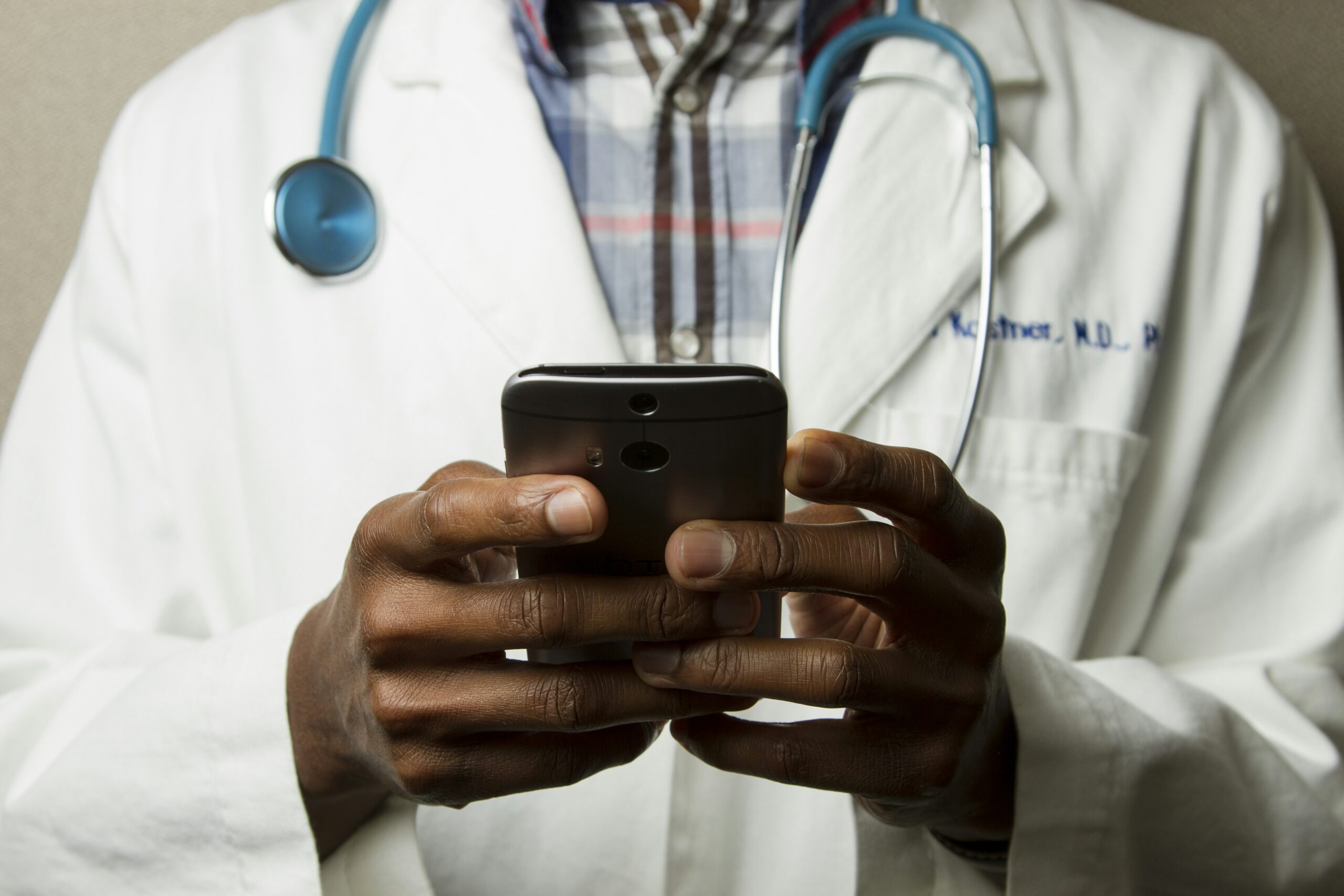

You swallow a pill. Your symptoms ease. You feel better.
Plot twist: the pill contains no active drug.
That’s not magic. That’s biology plus context—your brain responding to meaning, not molecules. When people say “mind over medicine,” they often picture wishful thinking. But the placebo effect sits in a more interesting lane: the brain uses expectation, learning, and social cues to change real experiences—especially symptoms like pain, nausea, fatigue, and anxiety.
Let’s break down how the placebo effect works, what science says it can (and can’t) do, and how to use this knowledge without falling for fake cures.
What the placebo effect actually is (and what it isn’t)
A placebo is an inactive treatment—like a sugar pill or saline injection—used in research to compare against an active treatment. The placebo effect means a person experiences a beneficial outcome because they expect benefit or because the treatment context itself triggers change. The U.S. National Center for Complementary and Integrative Health describes it as a beneficial health outcome that comes from anticipating help, and it also notes that the patient–provider interaction can contribute to the response.
Important: the placebo effect does not mean “it was all in your head” in the dismissive way people say it. Your brain is your head. It runs pain perception, stress hormones, immune signaling, and more. When your brain shifts those systems, you feel it in your body.
Also important: Usually how the placebo effect works best on symptoms (how you feel) rather than structural disease changes (like shrinking a tumor). People can still feel much better, but placebo doesn’t replace real treatment for serious conditions.
The core idea: your brain predicts, then your body follows
To understand how the placebo effect works, start with a basic brain habit: prediction.
Your brain constantly guesses what will happen next. If it predicts relief, it can dial down alarm signals (like pain or nausea). If it predicts harm, it can dial them up (hello, nocebo—more on that soon).
Researchers describe placebo effects as responses to the context in which treatment happens, driven by expectation, learning, and social cognition, with measurable brain and chemical pathways involved.
Think of the placebo effect as your brain saying:
“This looks like treatment, the doctor seems confident, I’ve improved before… so I’ll reduce symptom intensity to match that expectation.”
Not because your brain wants to impress anyone. It does it because prediction helps survival.
How the placebo effect works: the 3 main mechanisms
1) Expectation: “This will help”
Expectation acts like a volume knob. If you genuinely expect improvement, your brain can change how you perceive symptoms—especially pain.
This does not mean “just think positive.” It means your brain uses belief as data. Harvard Health describes the placebo effect as more than positive thinking and emphasizes the brain–body connection behind it.
2) Conditioning: your brain learns the pattern
If you’ve taken a real painkiller before and felt relief, your brain can learn: pill → relief. Later, even an inert pill can trigger part of that learned response.
This is classic conditioning like your body salivating at the smell of food. Your brain links cues (pill shape, clinic smell, white coat) to outcomes.
A review of placebo mechanisms also highlights conditioning and points to mediators like dopamine and endorphins, with brain imaging showing placebo responses can activate similar brain areas as active drugs.
3) Meaning + relationship: the “care effect”
The way a clinician communicates matters: warmth, clarity, confidence, and time can reduce threat and increase trust. That can shift stress responses and symptom processing.
NCCIH explicitly notes that the patient–provider interaction can create positive responses independent of the specific treatment.
If you’ve ever felt better just because a calm professional took you seriously, congratulations—you’ve met the “meaning response,” placebo’s socially intelligent cousin.
The biology: yes, chemicals move
Here’s the part that makes skeptics sit up.
Placebo and pain: your brain can release its own opioids
Strong evidence links placebo analgesia (placebo pain relief) to endogenous opioids—your body’s own opioid system.
A landmark brain imaging study showed that a placebo presented as an analgesic can activate μ-opioid receptor activity in pain- and stress-related brain regions, and that activation correlates with reduced pain.
Classic experimental work has also dissected placebo analgesia mechanisms and supports endogenous opioid involvement.
This is a big piece of how the placebo effect works: expectation doesn’t float in the air—it can trigger real neurochemical changes.
Placebo and dopamine: “reward” circuits get involved
Dopamine pathways play a role in motivation, reward, and movement. Reviews describe dopamine as one mediator of placebo effects and note brain imaging evidence where placebos can mimic drug effects in certain contexts (including Parkinson’s research).
No, this doesn’t mean placebo “cures” Parkinson’s. It means expectation and context can change symptom expression and brain signaling in measurable ways.
What placebo effects are strongest for
If you want the honest map of how the placebo effect works, look at where it performs best:
Often strong effects
- Pain (acute and chronic pain perception)
- Nausea and discomfort
- Fatigue and subjective well-being
- Anxiety-related symptoms and stress responses (context-driven)
Often limited effects
- Clearing infections
- Fixing broken bones
- Reversing advanced structural disease on its own
Placebo tends to shine when symptoms involve brain interpretation and body regulation because those systems respond to prediction, threat, and safety cues.
Open-label placebo: can it work even when you know?
One of the most surprising developments: open-label placebo (OLP). That means people take placebos knowing they are placebos—no deception.
A randomized trial in irritable bowel syndrome found open-label placebo produced greater symptom improvement than a no-treatment control when the patient–provider interaction was matched.
Later work and discussion in this area continued to explore and support the clinical relevance of open-label placebo approaches in IBS contexts.
So how the placebo effect works might not require “fooling” the brain. The ritual, the rationale, and the expectation (“this can help through mind–body mechanisms”) can still create change.
That doesn’t mean OLP works for everything. It does mean your brain can respond to meaning even when you see the trick—like enjoying a movie while knowing it’s actors.
The nocebo effect: when expectation backfires
Now the other side of the coin: nocebo. Negative expectations can produce negative outcomes—more symptoms, more side effects, more distress.
Reviews of clinical practice highlight that negative expectations from the clinical encounter can create negative outcomes known as nocebo effects.
Other reviews describe nocebo as the induction or worsening of symptoms from sham or active therapies, emphasizing its relevance to treatment outcomes.
In plain language: if you expect harm, your brain may amplify threat signals. That doesn’t mean side effects are imaginary. It means expectation can add fuel to the fire.
This is why communication matters. A long list of side effects read in a scary tone can create symptoms in some people—especially if anxiety already runs high.
Placebo in clinical trials: why researchers care so much
If you want to understand how the placebo effect works, look at why medicine invests so much energy in controlling for it.
Clinical trials use placebo controls because:
- Symptoms can change naturally over time.
- People can improve simply because they receive attention and monitoring.
- Expectation can create real symptom shifts.
The placebo arm helps researchers measure how much improvement comes from the drug itself versus context, expectations, and natural variation.
This is not a loophole. It’s a feature. Medicine takes placebo seriously because placebo is powerful enough to confuse results if researchers ignore it.
Practical takeaways: how to use placebo science ethically (without falling for scams)
Let’s keep this grounded and useful.
1) Use “context power” to support real treatment
If you take prescribed medicine:
- Take it consistently.
- Pair it with a calm routine.
- Track progress in a simple way.
Ritual and consistency can strengthen helpful expectations. That can improve symptom management alongside real treatment.
2) Choose clinicians and environments that reduce threat
Feeling rushed, judged, or confused increases stress. A clear explanation and a trusting relationship can reduce uncertainty and help your brain interpret symptoms more safely.
3) Watch your wording (especially with side effects)
You can stay informed without “nocebo-ing” yourself.
Try this mental script:
- “Side effects are possible, not guaranteed.”
- “If something happens, I’ll handle it early.”
This doesn’t deny risk; it avoids feeding panic.
4) Don’t let placebo logic sell you fake cures
A supplement ad might say, “Thousands swear by it.” That’s not evidence. Placebo effects can make people feel better temporarily, especially for subjective symptoms. That doesn’t prove the product treats the underlying condition.
A good rule:
- If someone promises miracle results and hates clinical trials, run.
Common myths (quick reality check)
“Placebo means it’s fake.”
No. The pill may be inert, but the response can involve real brain and neurotransmitter changes—especially in pain pathways.
“If placebo works, you don’t need medicine.”
Not true. Placebo effects complement treatment context; they don’t replace necessary medical care.
“Only gullible people get placebo effects.”
Also not true. Expectation and learning are normal brain functions. Smart brains predict too.
So, how the placebo effect works—one clean summary
How the placebo effect works comes down to this:
- Your brain predicts outcomes based on cues (pill, doctor, setting).
- Expectation and conditioning change symptom processing.
- Brain systems (including opioids and dopamine pathways) can shift, especially for pain and other subjective symptoms.
- The patient–provider relationship and communication shape those predictions.
- Negative expectation can backfire as nocebo.
In other words, your brain doesn’t just “observe” treatment. It participates.
And honestly? That’s kind of beautiful. Also mildly annoying when your brain participates in panic—but that’s why learning this matters.Our beliefs and expectations can trigger real physiological changes, demonstrating the powerful connection between mind and body.
The placebo effect is a remarkable phenomenon where patients experience genuine improvements in their condition after receiving treatments with no active therapeutic ingredients, purely through the power of belief and expectation. This isn’t mere imagination—modern neuroscience has revealed that placebos can trigger the release of endorphins, dopamine, and other neurochemicals that produce measurable physiological changes. Brain imaging studies show that placebos activate the same neural pathways as actual medications, reducing pain perception, inflammation, and anxiety. The effect is so powerful that pharmaceutical companies must prove their drugs work better than placebos in clinical trials. Factors that enhance the placebo effect include the doctor’s confidence, the treatment’s perceived cost and complexity, and the patient’s expectations. While this doesn’t mean we should replace medicine with sugar pills, understanding the placebo effect reveals the profound influence our minds have over our bodies and opens new possibilities for harnessing this power in medical treatment, from chronic pain management to mental health interventions.
FAQ
1) How does the placebo effect work?
It works when your brain expects improvement and adjusts how you experience symptoms—especially pain, stress, and nausea—through real brain-body pathways.
2) Is the placebo effect “all in your head”?
It starts in the brain, but the results can feel very real in the body. It can change symptom intensity, not just your opinion about it.
3) Can a placebo cure diseases?
Usually no. Placebo effects are strongest for symptoms (like pain and fatigue). They don’t reliably treat infections, tumors, or structural damage.
4) What’s the difference between placebo and nocebo?
Placebo is improvement from positive expectations. Nocebo is worsening symptoms or side effects from negative expectations.
5) Can a placebo work if I know it’s a placebo?
Sometimes, yes. Studies on “open-label placebos” show some people still improve, likely because the treatment ritual and mind-body expectation still matter.
6) Why do doctors use placebos in clinical trials?
To separate the real effect of a drug from improvements caused by expectations, attention, and natural symptom changes over time.
Read other articles at: https://DecodeFacts.com