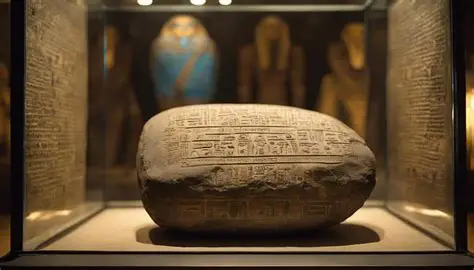
The Library of Alexandria: Ancient Knowledge Lost
Imagine a place built to collect every book worth reading then imagine losing it. That’s the emotional punch behind the Ancient Library of Alexandria, the most famous library of classical antiquity. But the real story is even more interesting than the legend: it’s about ambition, information control, brilliant scholars, political instability, and a long, messy decline rather than one neat bonfire.
In 2026 terms, the Ancient Library of Alexandria was a “global knowledge platform” with state funding, aggressive acquisitions, expert editors, and a research campus vibe. And like any big platform, it depended on power staying stable. When that stability cracked, knowledge became fragile.
What the Ancient Library of Alexandria actually was
When people say “Library of Alexandria,” they usually picture a single grand building stuffed with scrolls. In reality, it was closely tied to the Mouseion (Museum)—a research institute supported by the Ptolemaic rulers in Alexandria. Think: scholars, lectures, editing projects, and serious research not just silent reading.
Ancient writers describe a community of scholars supported with salaries and provisions. The point was simple: remove daily hassles so the mind can do its best work. (Modern equivalent: “We offer free lunch so you’ll write better code.”)
So the Ancient Library of Alexandria wasn’t only a storehouse. It also worked like:
- a research institute,
- a publishing and editing hub,
- and a prestige project meant to make Alexandria the intellectual capital of the Mediterranean.
The library’s bold mission: “Collect everything”
The Ptolemies aimed for a universal collection: philosophy, medicine, mathematics, poetry, history—anything written that mattered. Ancient reports describe aggressive acquisition strategies, including copying texts and maintaining bibliographic records.
This matters because it explains why the Ancient Library of Alexandria became so influential. It didn’t merely preserve books. It gathered them at scale, compared versions, edited texts, and built standards for scholarship.
The world’s early “search engine”: Pinakes, the master catalog
A library becomes powerful when people can actually find things. That’s where Callimachus comes in. Sources describe his Pinakes (“Tables” or “Lists”) as an extensive catalog of the authors and works held in the Library—an early landmark in bibliography and library organization.
The big takeaway: the Ancient Library of Alexandria didn’t just hoard scrolls. It organized knowledge in a systematic way—so scholars could navigate it.
What kinds of work happened there?
Even if we don’t have a “day in the life” vlog from 240 BCE, we do know the Mouseion became famous for scholarship across literature and science. The story of Alexandria is strongly associated with:
- editing and standardizing important texts,
- mathematics and astronomy,
- geography and measurement,
- and building tools (like catalogs) that made research faster.
In other words, the Ancient Library of Alexandria wasn’t only about preservation. It acted like an engine that produced knowledge.
So who destroyed it?
Here’s the uncomfortable truth: serious historians increasingly treat the Library’s “destruction” as a sequence of losses over time, not a single cinematic moment. Encyclopaedia Britannica notes that the fate of the library (and related sites) has long been controversial, but modern scholarship increasingly agrees that the major collections perished well before the 7th-century Arab conquest.
Still, several major events get discussed—some with stronger evidence than others.
Event 1: Julius Caesar’s fire (48 BCE) — damage, but how much?
One frequently cited episode comes from the civil war in Alexandria when Julius Caesar set fire to ships in the harbor. Ancient and later sources disagree on how far that fire spread and how much it destroyed. Some accounts claim major damage, while others suggest partial loss.
A key point: even if this event burned a large number of scrolls, it doesn’t automatically prove the entire institution vanished overnight. Several sources frame the story as complicated and debated.
If you’ve ever lost a phone, you know the grief. If you’ve ever lost a hard drive without backup, you know the panic. Now multiply that by a civilization that wrote on papyrus.
Event 2: The Serapeum and the late 4th century (391 CE)
Alexandria likely had more than one significant library site over time, including a “daughter” collection associated with the Serapeum (Temple of Serapis). Late Roman religious conflict in Alexandria culminated in the Serapeum’s destruction in 391 CE, a well-known flashpoint in the city’s history.
Important nuance: sources often say the Serapeum may have included a remaining collection of scrolls, but the exact scale and continuity with the earlier main library remain debated.
So, when people say “Christians destroyed the Library of Alexandria,” the more careful version is: late antique conflicts likely damaged or erased what remained in associated collections.
The less dramatic (but more realistic) villain: slow decline
If you want a single “villain,” it might be institutional fragility.
Big knowledge institutions need:
- stable funding,
- political support,
- safe storage and maintenance,
- and continuity of skilled staff.
Lose those, and collections shrink, scatter, or decay—especially in a city that faced repeated unrest and changing rulers across centuries. That’s why many historians talk about dwindling and fragmentation rather than one definitive “burning day.”
The tragedy of the Ancient Library of Alexandria is that it probably died the way many things die: not with one loud crash, but with many smaller cracks.
Myths vs facts: clearing the smoke
Myth: “The whole Ancient Library of Alexandria burned in one night.”
Reality: Evidence points to multiple damaging episodes and a longer decline, with historians disputing the scale of any single event.
Myth: “We know exactly how many scrolls it held.”
Reality: Numbers vary widely in later retellings, and precise figures are hard to verify. What matters more is its reputation and influence as a major hub of scholarship.
Myth: “It survived until the Arab conquest.”
Reality: Britannica notes growing agreement among serious scholars that the main libraries perished long before the 7th century.
What did the world lose?
We need to be honest: we can’t list exact lost titles like a missing luggage report. But we can describe what was at risk when a major hub of copying, editing, and scholarship collapsed.
When a place like the Ancient Library of Alexandria weakens, the losses include:
- rare versions of texts that later survive only in corrupted copies,
- scholarly commentaries and critical editions,
- scientific and mathematical works that never got recopied widely,
- and “minor” works that don’t look minor until they’re gone.
It’s not only about missing books. It’s also about missing paths of learning—the chain of teachers, editors, and institutions that keep knowledge alive.
And yes, the irony still hurts: humans built a knowledge machine… and forgot to build a long-term backup plan.
Why the story matters in 2026
The Ancient Library of Alexandria became a symbol because its lesson is modern:
- Centralization is powerful and risky.
When knowledge concentrates, discovery accelerates. But a single point of failure becomes catastrophic. - Preservation isn’t automatic.
Storing information is not the same as maintaining access, organization, and copying practices across time. The Pinakes idea reminds us: organization is part of preservation. - Politics shapes what survives.
Funding priorities, conflict, and ideological shifts decide what gets protected and what gets erased.
In short: the Ancient Library of Alexandria feels like ancient history, but it behaves like a case study in information security.
A modern echo: Bibliotheca Alexandrina
Egypt opened the Bibliotheca Alexandrina in 2002 as a modern library and cultural center that commemorates the ancient legacy. It doesn’t “replace” the old library, but it keeps the idea alive: Alexandria as a place where knowledge belongs to everyone, not only to the powerful.
Final thought
The Ancient Library of Alexandria wasn’t just “lost knowledge.” It was a human decision to treat learning as a public project—fund it, organize it, protect it, and invite the world’s brightest minds to build on it. That’s why its disappearance still feels personal.
Because deep down, we all know the real tragedy isn’t that paper burned.
It’s that a civilization briefly proved what humans can do when they take knowledge seriously… and then let the system crumble.
Read other articles at: https://DecodeFacts.com
Previous
The Quantum World: Understanding Superposition
Next
Neural Networks: How AI Learns Like Humans